

Outdoors · Elko County
Hot Springs of Elko County
Where you can soak, where you can only look, and how to do both without getting burned, stuck or trespassing.
- 6 places, every fact sourced
- 5 more to know about
- Checked October 24, 2026
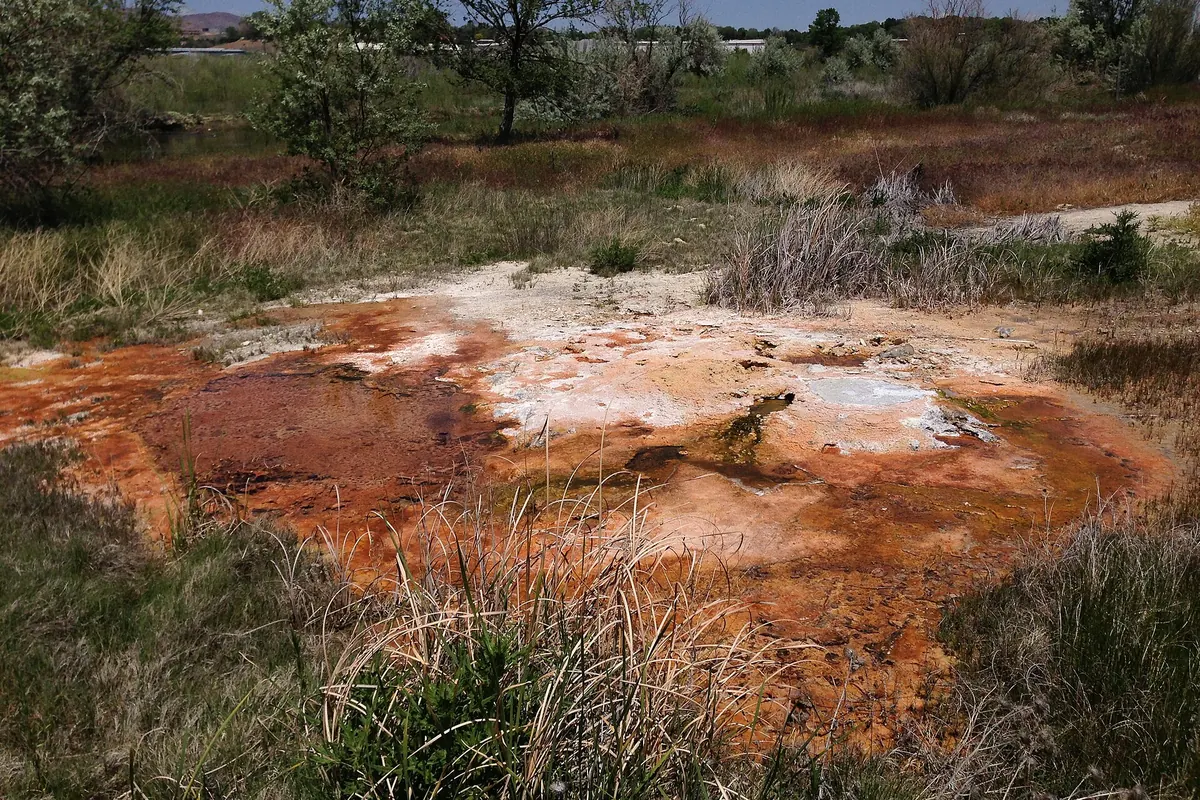
Elko Hot Hole in 2014. It is closed now: look, don’t touch. Photo Famartin, CC BY-SA 3.0
Northeastern Nevada sits on hot water. The state geothermal survey lists dozens of warm and hot springs in Elko County, but only a few are places you can visit, and fewer still are places you can soak. Many are on private ranch land, some are scalding, and the best ones are at the end of rough dirt roads. Below are the ones with clear public information, with land status flagged on every card.
Nevada springs can be hot enough to scald. Feel the water before you get in, keep your head above water, bring a buddy, and never climb a fence or cross onto posted land.
6 of 6 shown
- Public
- Pay
- View only
- Closed
Pins only where a public source publishes the spot. Spots on private land are listed without a pin. Phone GPS is unreliable out here: carry a paper map.
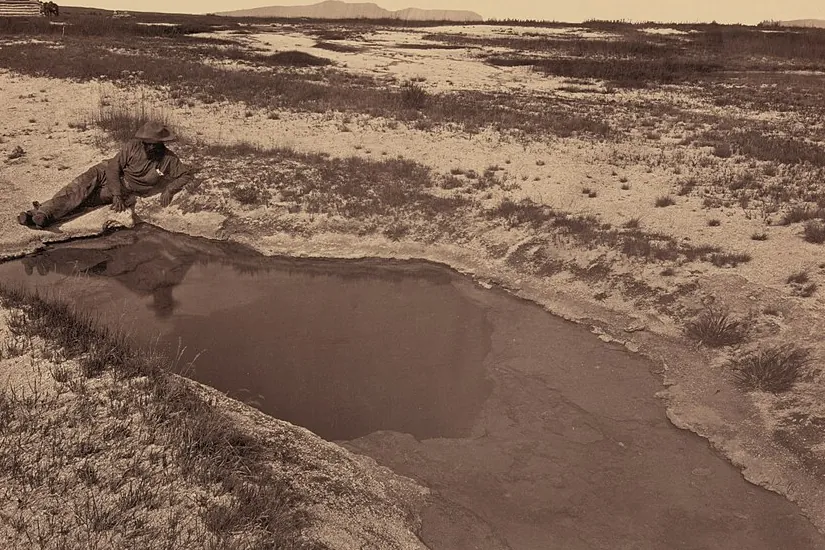
Smith Ranch Hot Springs
Ruby Valley Hot Springs
South Ruby Valley · about 60 miles from Elko
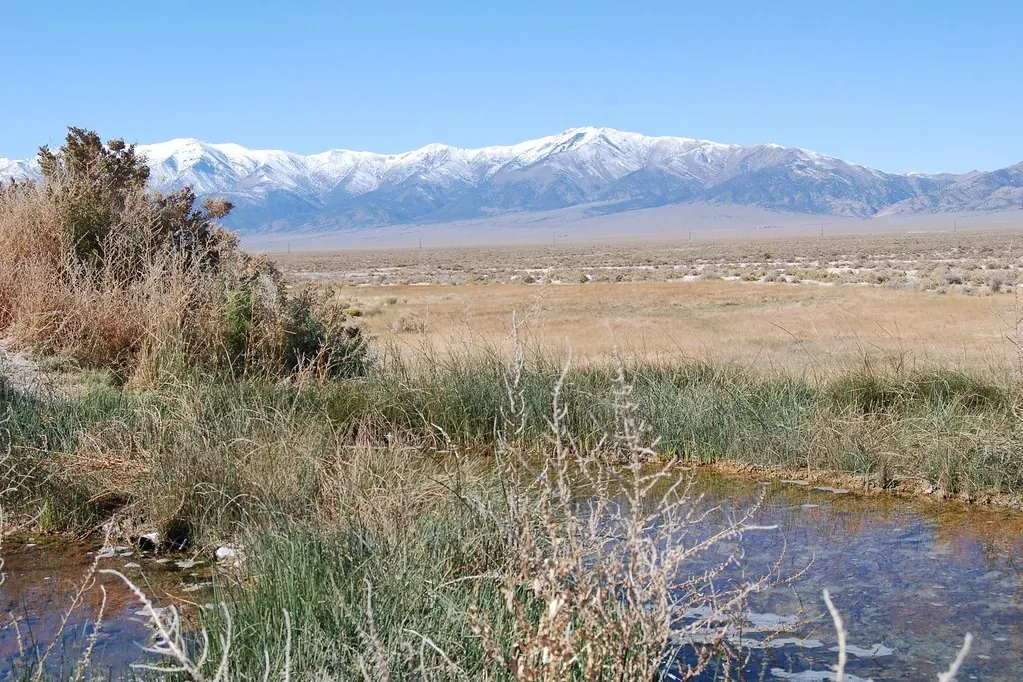
Elko County’s classic wild soak: a deep, clear, spring-fed pool in the marshes of southern Ruby Valley, with the Ruby Mountains on the skyline. Explorer John Bidwell described the springs here as “boiling hot” in 1842.
- Temperature
- Main pool about 100°F (Travel Nevada); guides report 100–103°F in the main pool and 115–122°F in some side pools.
- Getting there
- The last miles are rough and unpaved. Travel Nevada recommends four-wheel drive at any time of year and says it is a necessity when wet and muddy. Winter visits are not advised.
- Land & access
- State land, open to the public year-round, no admission fee (Travel Nevada).
- Safety
- Some of the surrounding springs are far too hot to enter. Test before you get in.
- Cell service is extremely limited or nonexistent. Carry a spare tire (or two), extra food and water, and tell someone your plan.
- Ground around the pools is soft and marshy.
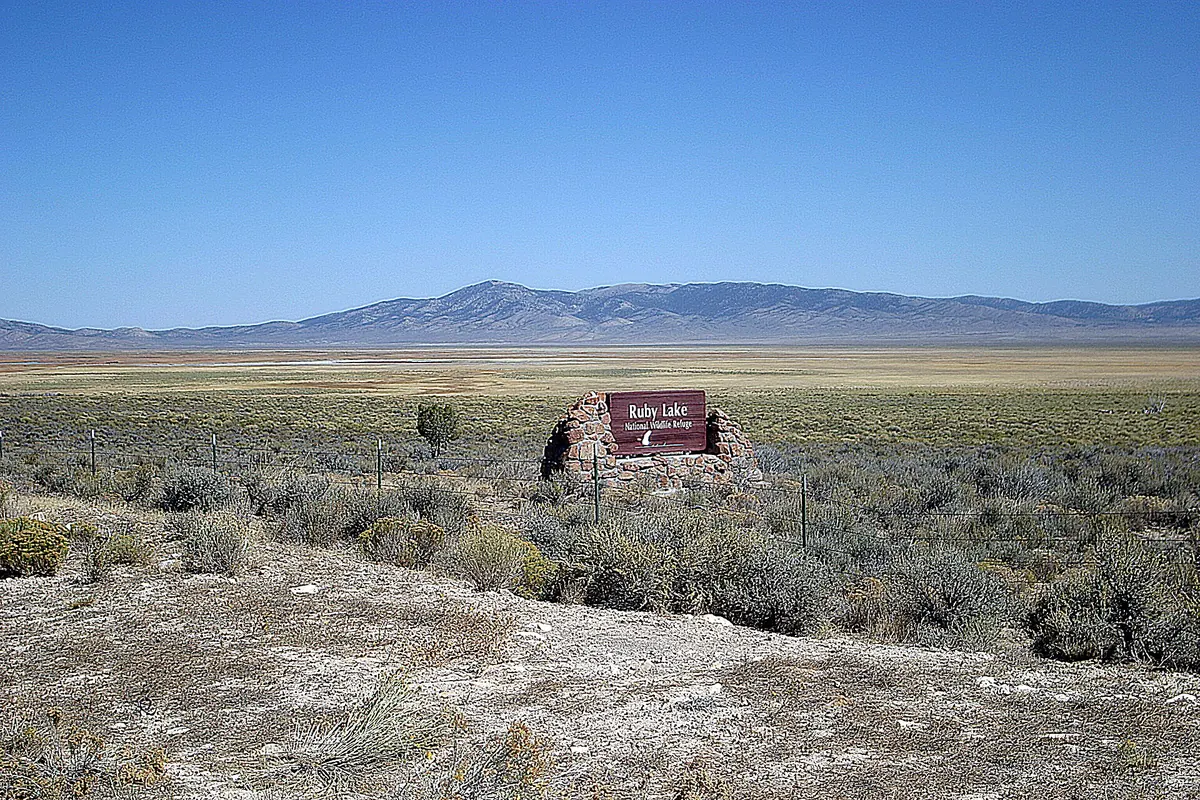
Bishop Creek Hot Springs
Twelve Mile Hot Springs
Bishop Creek canyon · about 12 miles north of Wells
An old cement swimming pool in a narrow canyon on Bishop Creek, where hot spring water meets the creek. NBMG’s 1979 survey already noted the pool.
- Temperature
- A concrete pool fed by hot and cold water. NBMG Bulletin 91 lists the spring at 102°F; guides report roughly 94–104°F in the pool.
- Getting there
- Guides say most visitors park at the cattle guard and walk about 2 miles each way on the old road. High-clearance 4WD can drive closer only in dry conditions; creek crossings can make the road impassable after rain, snowmelt or high water.
- Land & access
- Private land. Guides report the owner tolerates public access, and that this can be withdrawn if the place is mistreated. Obey any posted signs.
- Safety
- No facilities. Pack out everything, including trash left by others.
- No soap, no glass, no fires, and do not damage the pool wall.
- Do not cross flooded creek crossings.
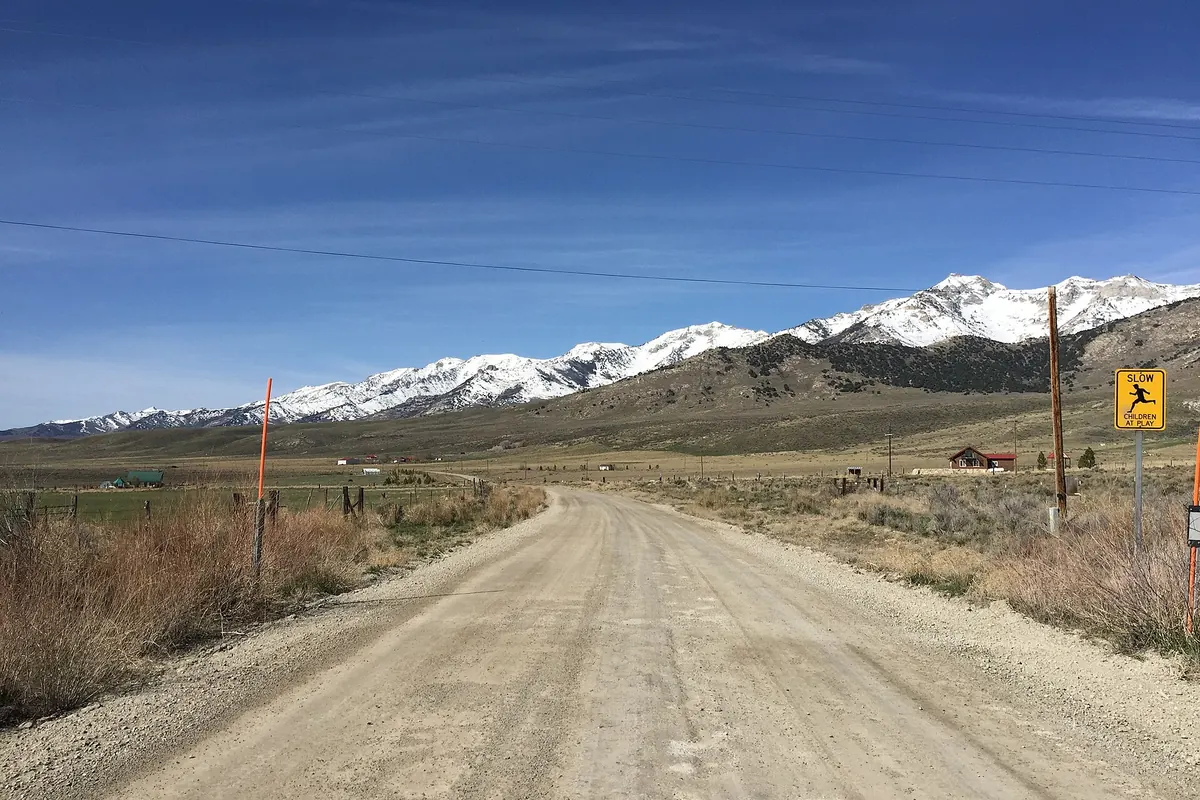
Look, don’t soak
Sulphur Hot Springs
North Ruby Valley · about 40 miles southwest of Wells
Where the 1846 Hastings Cutoff met the Ruby Mountains. “We came to a group of boiling springs… there can not be less than twenty,” emigrant Madison Moorman wrote in 1850. Steam still rises and is visible from the hot springs turnout on Ruby Valley Road (NPS).
- Temperature
- Up to 96°C (about 205°F), the hottest springs reported in Elko County (NBMG). Not soakable.
- Getting there
- The California Trail marker is on the south side of NV-767 / Ruby Valley Road (NPS). View from the turnout.
- Land & access
- Private property (NPS). Stay at the turnout; do not enter.
- Safety
- Near-boiling water and thin crusts. Never walk on the mound.
- The rotten-egg smell is hydrogen sulfide from the springs (NBMG).

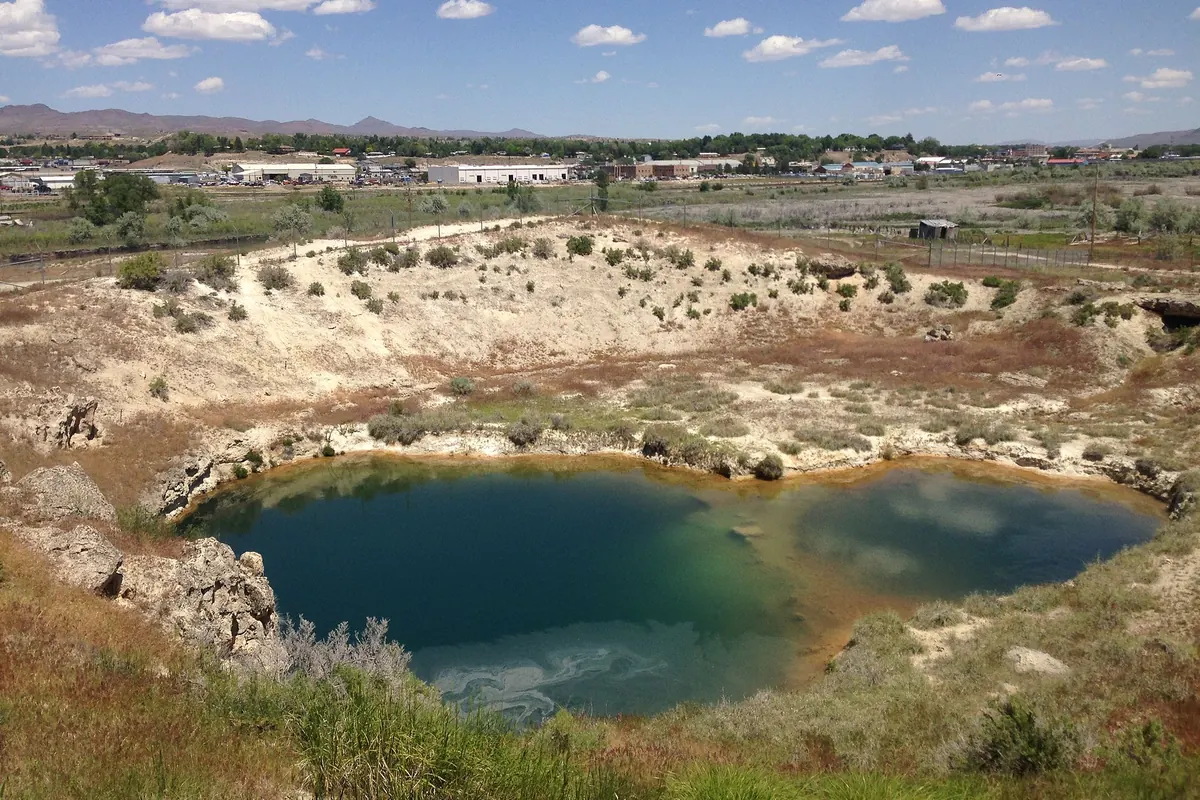
Closed · view only
Elko Hot Hole
Bullion Road · south edge of Elko
A turquoise geothermal pool that emigrants on the California Trail used as a landmark, and which fed an 1868 bathhouse and later hotels. Today it is fenced, with California Trail interpretive signs you can read from outside.
- Temperature
- The Elko hot springs measure 65.5–88.9°C (about 150–192°F), hot enough to scald (NBMG).
- Getting there
- In town, off Bullion Road. Read the signs and look through the fence; do not climb it.
- Land & access
- Private property and closed. The NPS asks visitors to respect the closure.
- Safety
- People have died here, including a 2018 drowning. The water is scalding in places and deep.
Road trip · Lander County
Spencer Hot Springs
Big Smoky Valley near Austin (outside Elko County)
Cowboy tubs (metal cattle troughs) and a natural soft-bottom pool in the Big Smoky Valley, three or sometimes four spots in all. Watch for the Hickison wild burros. Worth the drive when you are headed to Austin.
- Temperature
- Source water about 130°F; the tubs run in the low 100s, and you control the heat by moving the inflow pipe in or out (Travel Nevada).
- Getting there
- Near Austin. Travel Nevada suggests Austin Tourism (775-964-2200) for trip planning.
- Land & access
- BLM public land, free and open to all. Primitive camping is first-come, first-served (Travel Nevada).
- Safety
- Check fire restrictions before camping. Camp well away from the water.
- Feel the water before you get in; the source is scalding.
Sources (1)
Pay facility · Idaho
Nat-Soo-Pah Hot Springs
Hollister, Idaho · south of Twin Falls (outside Nevada)
A family hot springs pool with a campground, open for over 100 years. The easiest soak for families heading north on US-93.
- Temperature
- Swimming pool about 92°F, spa about 100°F, hot soak about 105°F (Hot Springs West).
- Getting there
- Drive-up. Pool season is May 1 to Sept 6, 2027 (closed now). Campground listed as open through Oct 15. Call (208) 655-4337.
- Land & access
- Private business. Swim admission $12 ages 6 and up, $5 ages 1–5 (2026 prices).
- Safety
- Follow posted pool rules; swimsuits required.
No springs match that filter.
On the maps, but not for visiting
You will see these on topo maps and in the state geothermal survey. They are not visitor sites: some are industrial, some are ruins, and for the rest we could not confirm public access, so treat them as private. No pins, on purpose.
-
Hot Sulphur Springs (Tuscarora) Northern Independence Valley, north of Tuscarora Over 25 springs along a 3-mile zone at 50–95°C (122–203°F). Now the site of a geothermal power plant. Industrial site · no public access · NBMG: Independence Valley
-
Mineral Hot Springs Near Contact, US-93 Reported at 60°C (140°F). NBMG notes an abandoned building and concrete pool along the highway. Abandoned · ownership unverified · do not enter · NBMG: Jackpot / Contact
-
Carlin Hot Spring Southwest of Carlin Reported at 78.8–82°C (174–180°F). Scalding. Ownership unverified · treat as private · NBMG: Carlin
-
Devils Punch Bowl North of Twin Buttes, near Deeth Springs at 47–52°C (117–126°F) beside a travertine mound about 50 feet high. Ownership unverified · treat as private · NBMG: Deeth
-
Hot Creek springs Hot Creek, south end of Wild Horse Reservoir Springs measured at 37–57.8°C (99–136°F). Ownership unverified · treat as private · NBMG: Wild Horse Reservoir
Etiquette & safety
Adapted from Travel Nevada’s Hot Spring Etiquette Guide and Dirt Road Code. Read the originals before your first trip.
Know what you are comfortable with: hotel hot tubs max out around 104.5°F. Soakable springs can sit right next to scalding source pools. Watch pets and friends.
Keep your head out of the water or pinch your nose: natural springs carry microscopic life.
Go with friends or family. Going solo? Tell someone your destination, route, nearest town and Plan B.
Map apps and even GPS can be flat-out wrong in backcountry Nevada. Carry topo maps or a recent statewide atlas.
Plenty of drinking water, food, a spare tire you know how to change, headlamps and extra batteries.
Springs come with dirt, mud and boggy ground. Leave good shoes in the car and bring a warm layer for the walk back.
Pack out everything you pack in, and bring an extra bag for what others left behind.
Cans, camp cups and other unbreakable vessels only. Broken glass hurts people and wildlife.
If there is a valve, leave a little water trickling: a scalding tub can take hours or days to cool, and it keeps pipes from freezing.
Park and camp far enough away that you don’t hog the view or scare off wildlife that uses the water.
Respect property boundaries and closures. Leave gates the way you found them.
Keep locations off the social map. Internet popularity can get springs overrun, trashed and closed.